
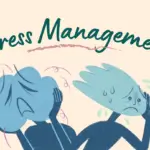
Stress doesn’t just affect your body, it rewires how you think feel and behave. Have you ever walked in a room and forgot what you were getting from that room? Or feel like there’s a constant cloud inside your brain that doesn’t allow you to think clearly? Maybe you find your self “snappier” than usual. These could both be symptoms of stress.
How Does Stress Change the Way Your Brain Works?
When experiencing an increased amount of stress, our brain sends signals to our body to engage in the “fight or flight” reaction. When this happens, increased hormones and neurotransmitters such as cortisol and adrenaline start flooding through our bodies. Experiencing constant increased levels of these hormones can lead to emotional conditions such as chronic anxiety but also physical conditions such as hypertension.
High levels of stress can also impact our ability to recall information, making good decisions and focus on tasks. Elevated levels of stress no only manifest in psychological changes but produce physiological changes to our brains. The hippocampus (the part of our brain in charge of memory creation) shrinks, emotional control centers weaken, fear circuits become stronger, and neural networks shift.
Why Does Stress Make You More Reactive (and Less Rational)?
When experiencing a perceived threat, our bodies engage in the “fight-flight-freeze” response in order to protect us. When our “alarm system” (the amygdala) is activated, it signals the body to release cortisol and adrenaline. The hippocampus (responsible for our memories), starts looking for past evidence of a perceived threat but when in increased stress, is unable to distinguish between an actual threat and perceived threat, which leads to “overreacting”.
The prefrontal cortex plays an important role in regulation our emotional responses. It provides logic, reason and problem-solving, which leads to “calming” the amygdala. The amygdala, when expose to chronic stress, over activates our fight or flight responses and can end up being enlarged as a result of stress. In increased stress, the amygdala ends up overriding the prefrontal cortex.
Surprisingly, not everyone “over react” when experiencing stress. Some people “under react”. While undergoing the fight or flight response, some people are “snappy” around others, engage in road rage, physical or verbal aggression and experience inability to stay still. When someone is “under reacting”, their freeze response is activated, which leads to experiencing blank stares, going quiet, avoiding eye contact, feeling detached or engaging in social withdrawal.
Can Chronic Stress Lead to Mental Health Problems?
Chronic stress can in fact lead to mental health problems. There is a strong connection between leaving stress untreated and eventually struggling with anxiety, depression or even PTSD. Chronic stress overloads your nervous system. This overload leaves you with a decreased ability to problem-solve and regulate your emotions. If left on check, it can lead you to engage in withdrawing from others and deteriorating relationships.
It can be easy to dismiss early warning signs of stress. Many people will experience headaches, fatigue, sleep issues, gastrointestinal issues, body aches or chest pain without a clear medical cause. If all medical reasons have been ruled out, then these symptoms could be an indication of chronic stress.
Sometimes you can miss the physical symptoms but may notice emotional signs such as, irritability, anxiety and even sadness. People react differently to stress. A combination of the physical and emotional symptoms can lead to changes in behavior, such as isolation, poor appetite and substance use.
How Can You Support Your Brain During Stressful Seasons?
Stressful seasons are bound to come. They are part of life. Tools that can get us through can nurture a health “brain environment” when we are facing stressful seasons.
Tools that can help you rewire your stress response are:
Ensuring that you are getting proper sleep, engaging in rich nutrition and obtaining consistent rest are other preventative strategies you can implement to ease yourself into stressful situations. You can also use your spirituality as a resource by engaging in prayer, grounding, meditation and other creative activities.
Conclusion
Stress management is not just self-care rather an essential part of cognitive and emotional health. Need additional tools to manage your stress? Check out our comprehensive guide to understanding and managing stress.
Still need help? Call us at (407) 906-5214 or use our self-scheduling tool.
DISCLAIMER: Although I am a mental health professional, the information I provide should not be considered a substitute for a formal mental health evaluation. If you or someone you know is struggling with mental health issues, you can contact us at (407) 906-5214.
Mental health is a complex and highly individualized matter, and what works for one person may not work for another. The best course of action for anyone dealing with mental health concerns is to schedule an appointment with us for a personalized assessment, diagnosis, and treatment options. Please remember that seeking help from a licensed mental health expert is a vital step in addressing mental health challenges.
If you or someone you know is in crisis or experiencing thoughts of self-harm or suicide, please contact emergency services or a crisis helpline immediately.